Nonprofit · Bay Area, California
1hz
One cycle per second. The pulse under everything.
A nonprofit for bass music and sound system culture. Home of DEEP AUDIO and 3rd Eye Collective.
One cycle per second. The pulse under everything.
A nonprofit for bass music and sound system culture. Home of DEEP AUDIO and 3rd Eye Collective.
Bass you don't just hear. Bass you feel.
1hz is a nonprofit for deep bass music and sound system culture: a community built around a rig, the crew who build and run it, the music made for it, and the crowd it moves.
Our mission is to promote music, sound and the related arts through education, public performances and exhibitions, and access for underserved audiences, including people who are deaf or hard of hearing. Low frequencies are felt in the body, so bass music is something everyone can share.
We are a community-run nonprofit. Nobody owns 1hz and there are no investors: it is run by an unpaid founding board, funded by tickets priced to cover costs, donations, grants and sponsors, and everything it earns goes back into the work.
Kingston, Jamaica. Crews build their own speaker stacks and take the music to the street. The sound system is born: rig, selector, crowd.
In 1950s Kingston few people owned a radio or a record player. Sound systems filled the gap: a truck, a generator, home-built amplifiers and wardrobe-sized speaker boxes, playing American R&B at open-air dances in the yards.
Rival sounds competed in clashes and guarded their exclusive records, scratching the labels off so nobody could find out what they were. When the supply of US records dried up, the sound system bosses started recording local artists, and that led to ska and the Jamaican record industry.
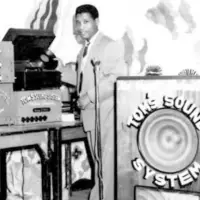
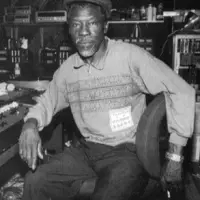
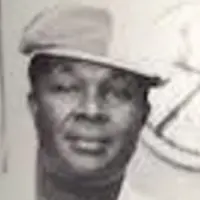
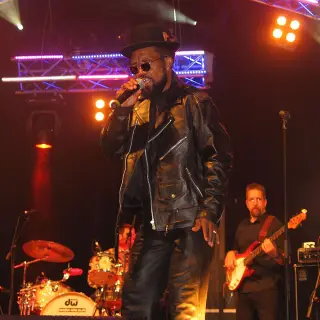
Sources: Sound system (Jamaican) · Clement “Coxsone” Dodd · Duke Reid
Photos: Tom the Great Sebastian: via RADII / Soundboks, fair use · Coxsone Dodd: via Wikipedia, fair use · Duke Reid: via Yaawd Media, fair use · Prince Buster: Yerpo, CC BY-SA 3.0
Engineers strip tracks back to drum and bass, add echo and space, and turn the mixing desk into an instrument. The bassline moves to the front.
Dub grew out of the “version”: B-sides with the vocals taken off, made for sound system deejays to toast over. Engineers pushed it further, dropping instruments in and out and drenching what was left in echo and reverb.
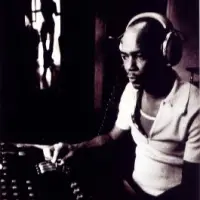
King Tubby worked on a modified mixing desk in his small Kingston studio and played his cuts out on his own Home Town Hi-Fi sound. The bass and drums moved to the front and the studio became an instrument.
Sources: Dub music · King Tubby · Lee “Scratch” Perry
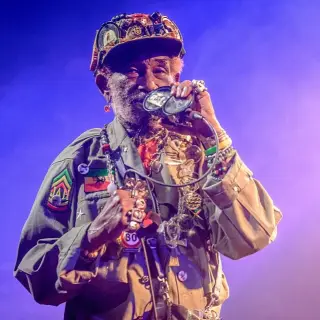
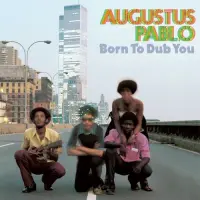
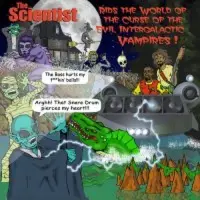
Photos: King Tubby: via Wikipedia, fair use · Lee “Scratch” Perry: pitpony.photography, CC BY-SA 3.0 · Augustus Pablo: artist SoundCloud, fair use · Scientist: artist SoundCloud, fair use
Jamaica goes digital: the Sleng Teng riddim puts dancehall on drum machines. In the UK, sound systems like Jah Shaka's take root, with sub-bass you feel in your chest. The 808 and the late-80s rave boom add the electronic side.
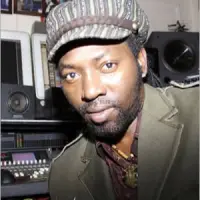
In 1985 King Jammy’s studio built a riddim from a Casio keyboard preset: Wayne Smith’s “Under Mi Sleng Teng”. Within months dancehall went digital, with drum machines and synth bass in place of live bands.
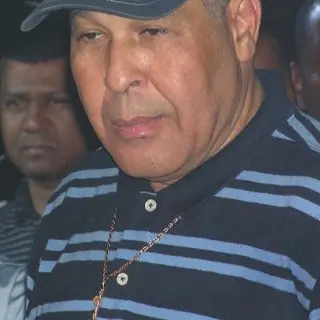
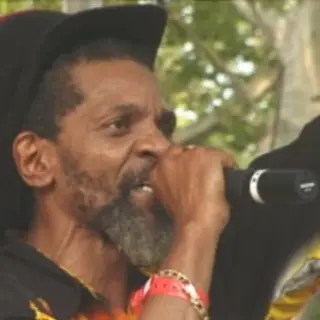
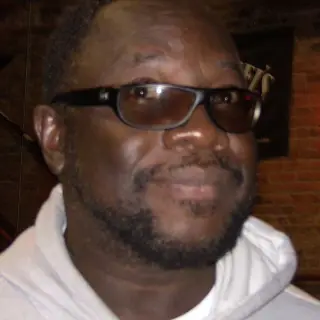
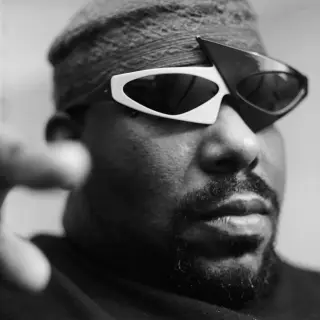
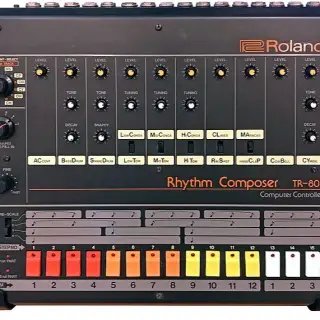
In the UK the children of the Windrush generation ran their own sound systems: Jah Shaka’s roots and steppers sessions, Saxon Studio’s MCs, clashes and the Notting Hill Carnival. In New York, “Planet Rock” (1982) put the Roland TR-808 on the dancefloor, and by 1988 acid house and rave had swept the UK.
Sources: Under Mi Sleng Teng · Jah Shaka · Planet Rock · Roland TR-808
Photos: King Jammy: E. Yamaguchi, CC BY-SA 4.0 · Wayne Smith: via Wikipedia, fair use · Jah Shaka: Wwwhatsup, CC BY 3.0 · Mad Professor: Chris Williams, CC BY-SA 3.0 · Afrika Bambaataa: Mika Väisänen, CC BY-SA 4.0 · Roland TR-808: Bryan Pocius, CC BY 2.0
In the UK, sound system bass meets breakbeats and rave. Fast drums, deep sub-bass.
Out of the UK rave scene, producers sped up breakbeats, the Amen break above all, and set them over sound system sub-bass and ragga vocals.
Pirate stations like Kool FM and specialist record shops spread it, and dances ran on dubplates cut for a single night. By 1994 jungle was the sound of London.

Sources: Jungle music · Amen break · Shy FX
Photos: Shy FX: Addictco1, CC BY-SA 4.0 · Congo Natty (Rebel MC): Saverios1, CC BY-SA 3.0 · M-Beat: artist SoundCloud, fair use · General Levy: artist SoundCloud, fair use · DJ Hype: Adam J Roberts, CC BY-SA 4.0
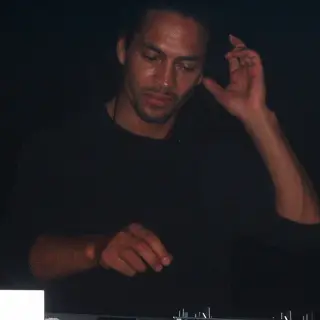
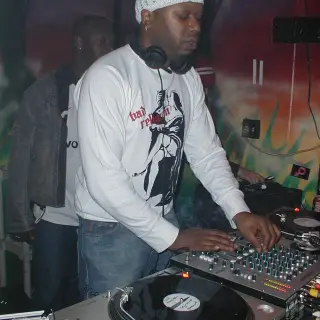
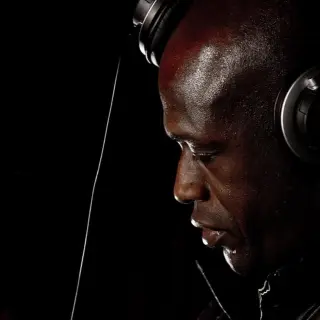
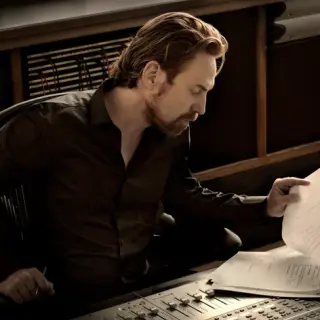
Jungle sharpens into drum & bass, and the sub becomes the centre of the mix.
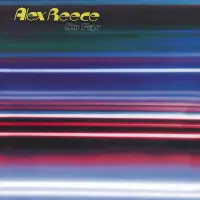
Jungle’s ragga edge gave way to a cleaner, more musical drum & bass: rolling breaks, Reese basslines, jazz and ambient textures.
Labels like Metalheadz and Good Looking set the tone, and in 1997 Roni Size and Reprazent won the Mercury Prize with “New Forms”.
Sources: Drum and bass · Goldie · Roni Size
Photos: Goldie: Alkivar, CC0 · LTJ Bukem: Wikimedia Commons, CC BY 2.0 · Roni Size: Eoindkelly, CC BY-SA 3.0 · Grooverider: Alkivar, CC BY-SA 2.5 · Fabio: Dilvie, CC BY-SA 3.0 · Photek: Faria Raji, CC BY-SA 3.0 · Alex Reece: artist SoundCloud, fair use
South London. Half-time weight, space and sub-bass made to be felt on a big system. Within a few years it crosses to the US: Dub War in New York, then SMOG and Low End Theory in Los Angeles.
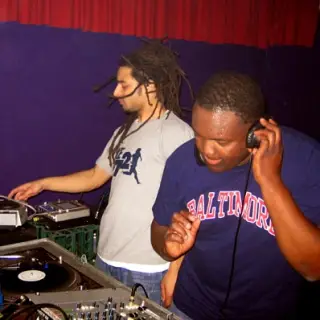
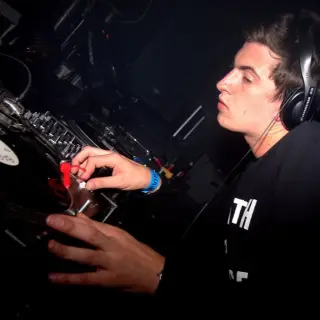
In Croydon and South London, producers took UK garage and 2-step, stripped the beat to a half-time pulse and pushed the sub-bass forward. Big Apple Records, the FWD>> night and Rinse FM were the hubs.
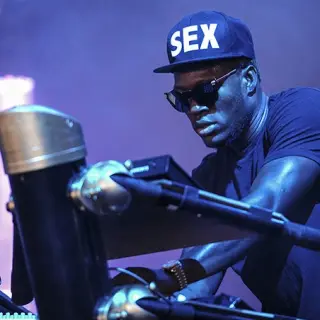
DMZ, started in Brixton in 2005, made it sound system music again: “Come meditate on bass weight.” The same year Dub War opened in New York, and SMOG and Low End Theory followed in Los Angeles.

Sources: Dubstep · Joe Nice / Dub War · Low End Theory
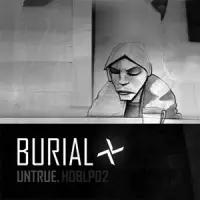
Photos: Mala (DMZ) & Joe Nice: Seckle, CC BY-SA 3.0 · Skream: drown (Flickr), CC BY-SA 2.0 · Kode9: basic_sounds, CC BY 2.0 · Benga: Stuart Sevastos, CC BY 2.0 · Loefah: artist SoundCloud, fair use · Burial: Untrue album cover, via Wikipedia, fair use
Dubstep explodes in America at festival scale while the underground keeps building. The genres blur into one bass music culture of producers, selectors, builders and crowds.
Dubstep went global and loud. In America it reached festival scale, and in 2012 Skrillex won three Grammys.
Trap, future bass and halftime branched off, and producers mixed hip-hop, dubstep and drum & bass freely. Underground, LA’s Low End Theory and beat-scene artists like Flying Lotus pushed experimental low end, and West Coast crews built their own deep bass culture.

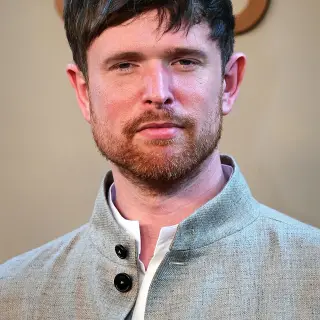
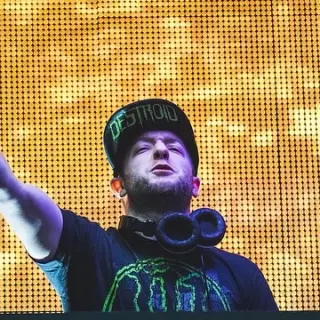
Sources: Skrillex · Low End Theory · Flying Lotus
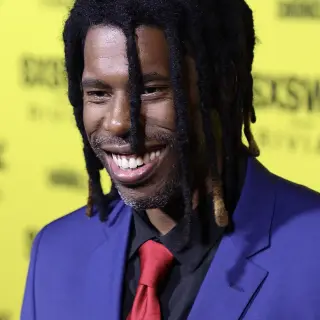
Photos: Skrillex: Carl Pocket, CC BY-SA 4.0 · Flying Lotus: Kolby Ari, CC BY-SA 4.0 · Daddy Kev: Coinslot, CC BY-SA 4.0 · James Blake: PhilipRomano, CC BY-SA 4.0 · Excision: Christian Bordeau, CC BY 2.0 · CharlestheFirst: artist SoundCloud, fair use
Slower, deeper, more spacious. Still built around the system, felt as much as heard. This is where 1hz lives.
Slower tempos, lots of space, detailed sound design and sub-bass you feel through the body: music made for a well-tuned system rather than a loud one.
A network of producers, crews and festivals, many on the US West Coast, keeps it growing. 1hz builds the systems and the community it needs.
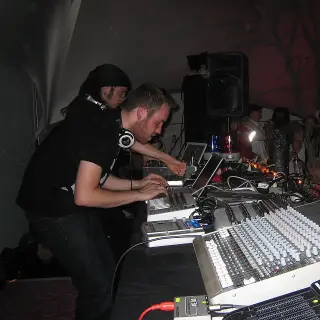
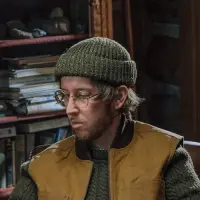
Photos: G Jones: CousinRyan5280, CC0 · Eprom: JasonUnbound, CC BY-SA 4.0 · Of The Trees: artist SoundCloud, fair use · Murkury: artist SoundCloud, fair use
Builds deep bass and high-clarity sound systems and sound products, in the sound system tradition: designed, built and tuned by the crew who play them.
Bass music events where producers, selectors and the crowd meet on the system, from intimate sessions to festival stages.
Hands-on sharing of sound system culture: building, tuning and running a rig, and making bass music that comes alive on one.
Volunteer-run and powered by the people around it. Anyone can bring an idea, an initiative or a pair of hands.
Bass music sessions, shows and art in public spaces, where music and art grow out of the collective.
Bringing sound to underserved audiences, including people who are deaf or hard of hearing. Bass you feel, not only hear.
1hz runs on gifts, grants and people. Sponsors are thanked by name and logo. That is the whole deal.
A Bay Area nonprofit, now being formed, for bass music and sound system culture. It promotes music, sound and the related arts through education, public performances and access for underserved audiences. It has two programs: DEEP AUDIO and 3rd Eye Collective.
A music culture built around a sound system: the rig, the crew who build and run it, the selectors and MCs, and the crowd. It grew out of the sound systems of Jamaica and runs through dub, jungle, drum & bass, dubstep and today's bass music.
Not yet. 1hz is being incorporated in California and will apply to the IRS for 501(c)(3) tax-exempt status. We will say so here when it is confirmed.
Nobody. A nonprofit has no owners and no investors. 1hz is run by its board, and anything it buys belongs to the nonprofit for good.
The sound system technology program: it builds deep bass and high-clarity sound systems and sound products, and teaches how they work.
The events program: bass music nights, performances and festivals.
One hertz is one cycle per second, about the pace of a resting heartbeat. Below what you hear, inside what you feel.